

As a badminton player, I’ve learned that the sport demands far more than quick feet and sharp reflexes. Every rally taxes your legs, shoulders, core, and wrists, and the repeated lunges, jumps, and overhead shots can take a real toll. Because of this constant strain, players are always at some risk of injury—ranging from blisters and muscle strains to ankle sprains, rotator-cuff issues, tennis elbow, and lower-back pain. That’s why understanding badminton injuries is not just useful; it’s essential for staying on court and performing at your best over the long run.
Knowing how and why injuries happen helps you spot early warning signs, refine technique, and train smarter. Thoughtful preparation matters: thorough warm-ups, mobility work, and progressive strength training build resilience. Clean footwork and balanced shot selection reduce needless stress on joints and tendons. Even small choices—appropriate Badminton shoes, supportive insoles, grip size, and string tension—make a noticeable difference. Recovery counts, too: quality sleep, hydration, nutrition, and planned rest days allow your body to repair and come back stronger. Most importantly, prevention should be a habit, not an afterthought. Learn correct movement patterns, increase workload gradually, and listen to aches before they become problems.
In this blog, I will explain the most common and major badminton injuries so players can understand them better.
Broadly, badminton injuries fall into two groups: ower-body and upper-body Their detailed classification is outlined below.
Lower-body Injuries during badminton game:

The lower body is the most injury-prone area for badminton players. High-intensity rallies demand constant movement—quick bursts forward and backward, sharp directional changes, and repeated jumps—which place heavy stress on the ankles, heels, knees, toes, and lower back. Poor footwork, incorrect jump and landing mechanics, or playing without a proper warm-up can quickly lead to serious injuries. We’ll explain the most common issues in detail later in this article. Footwear also plays a crucial role in prevention: shoes with adequate cushioning help absorb impact, while a secure, grippy (non-marking) sole reduces slips and awkward twists. With sound court movement, good technique, and the right shoes, players can significantly lower their risk of injury.
1. Sprained Ankle:
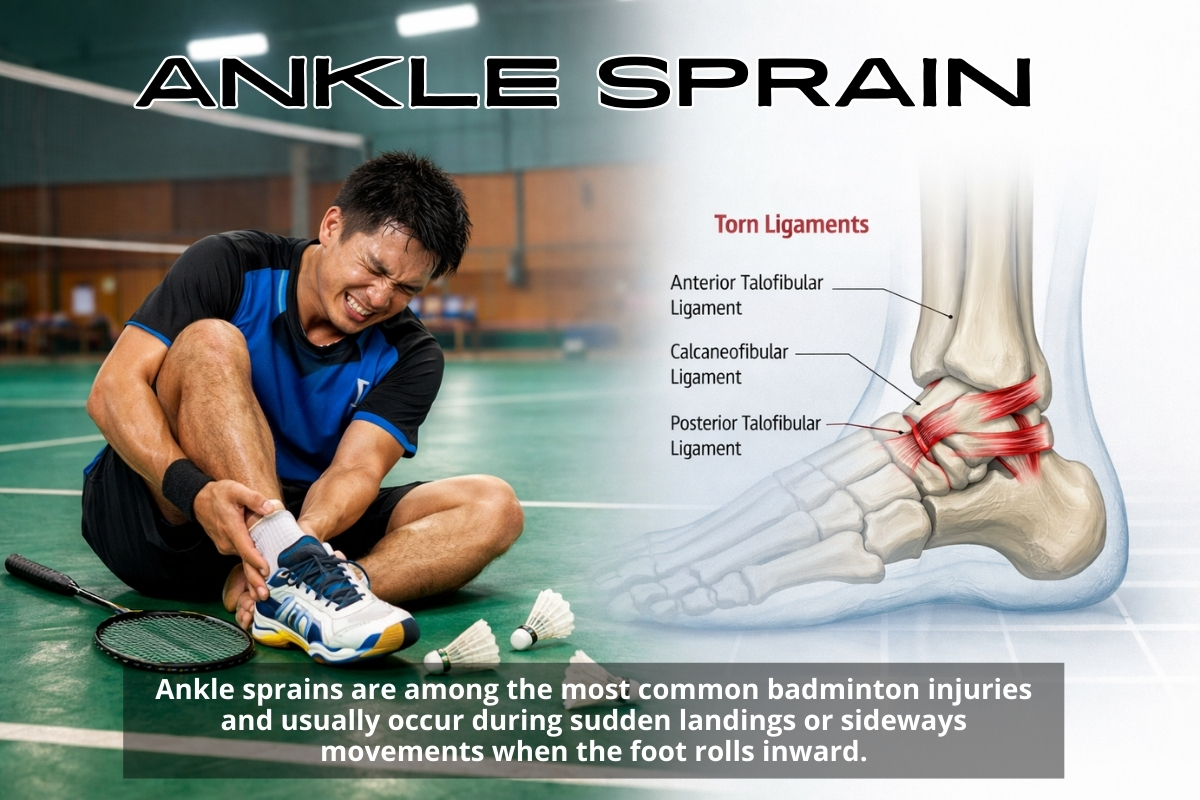
A sprained ankle is one of the most common injuries in badminton. It occurs when the ligaments that support the ankle are stretched or torn by an awkward twist or landing. This can happen to anyone—not just athletes—and many people experience it at least once. In badminton, it often occurs when a player overreaches, lands improperly after a jump or lunge, or makes a sharp change of direction after a shot.
Common symptoms of a sprained ankle:
Stiffness in the ankle joint
Swelling around the ankle
Redness or discoloration around the ankle and above the heel
Prevention:
Focus on proper footwork and jump/landing technique to reduce sprain risk.
Warm up thoroughly before stepping on court or starting a match.
Use appropriate badminton shoes with good grip and cushioning;ankle support or taping can further lower the chance of a sprained ankle.
2. Patellar Tendonitis:
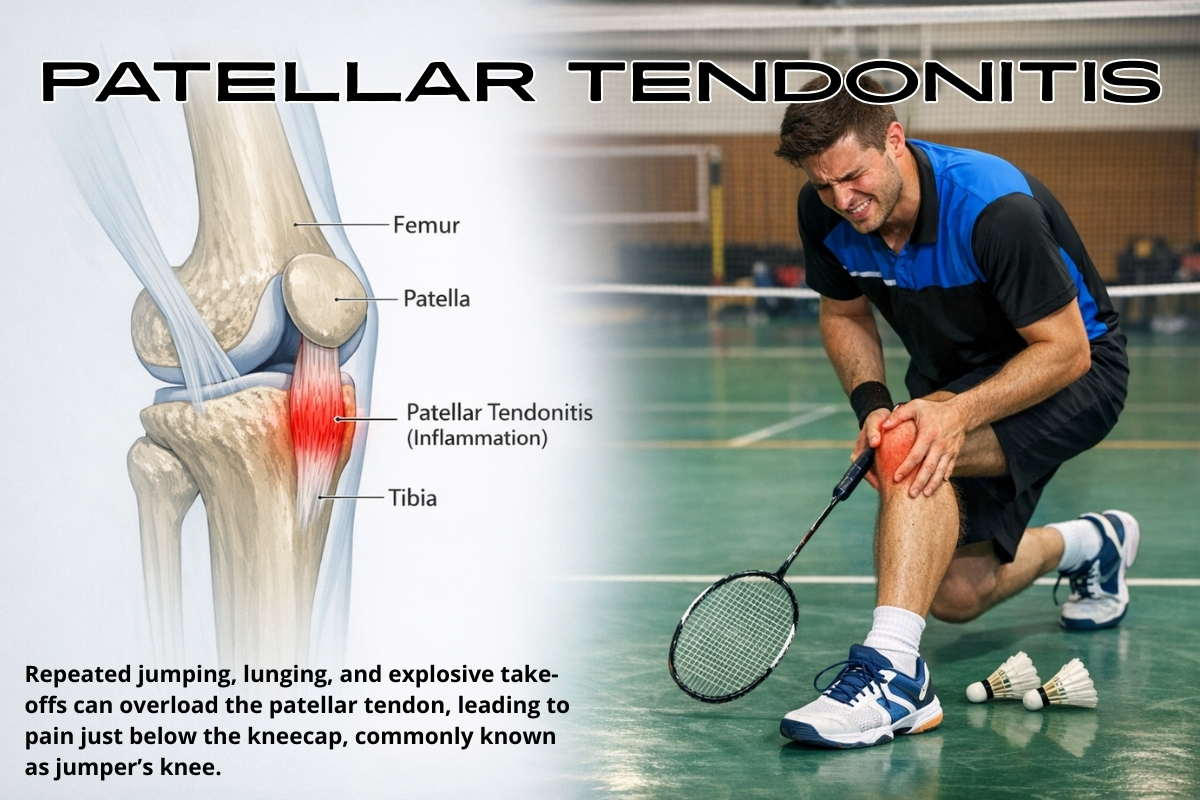
To understand this injury, it helps to know a bit of knee anatomy. The patellar tendon is a strong band that connects the kneecap (patella) to the shinbone (tibia). Working with the quadriceps, it straightens the knee—essential for jumping, running, and quick directional changes.
Patellar tendinitis (jumper’s knee) occurs when this tendon becomes inflamed or overloaded. Players feel pain and tenderness just below the kneecap, often with stiffness and discomfort during jumping, landing, or sharp movements. In badminton, it can significantly reduce explosive power and overall on-court performance.
Common symptoms of patellar tendinitis:
Pain during walking, jumping, or running
Swelling around the knee
Pain and tenderness at the front of the knee (just below the kneecap)
Discomfort when bending or straightening the leg
Prevention:
The most important aspect of preventing patellar tendinitis is to practice proper jump technique under the guidance of a qualified coach.
Always perform a proper warm-up and strengthening exercises before training.
Avoid overtraining—if you feel pain in your knee, listen to your body and take rest.
3. Achilles Tendon Rupture:

The Achilles tendon is a vital fibrous cord that connects the calf muscles to the heel bone, enabling essential movements like walking, jumping, and running. Improper jumping techniques, incorrect footwork, or slipping on the court can lead to a rupture, resulting in an Achilles tendon injury. This condition typically causes sharp pain at the back of the ankle.
Common symptoms of Achilles Tendon Rupture:
Swelling around the heel
Sharp pain at the back of the leg or ankle
Difficulty in walking or even standing
Prevention:
Focus on correct technique, especially while jumping
Perform a proper warm-up
Do proper stretching
Upper-body Injuries during badminton game:
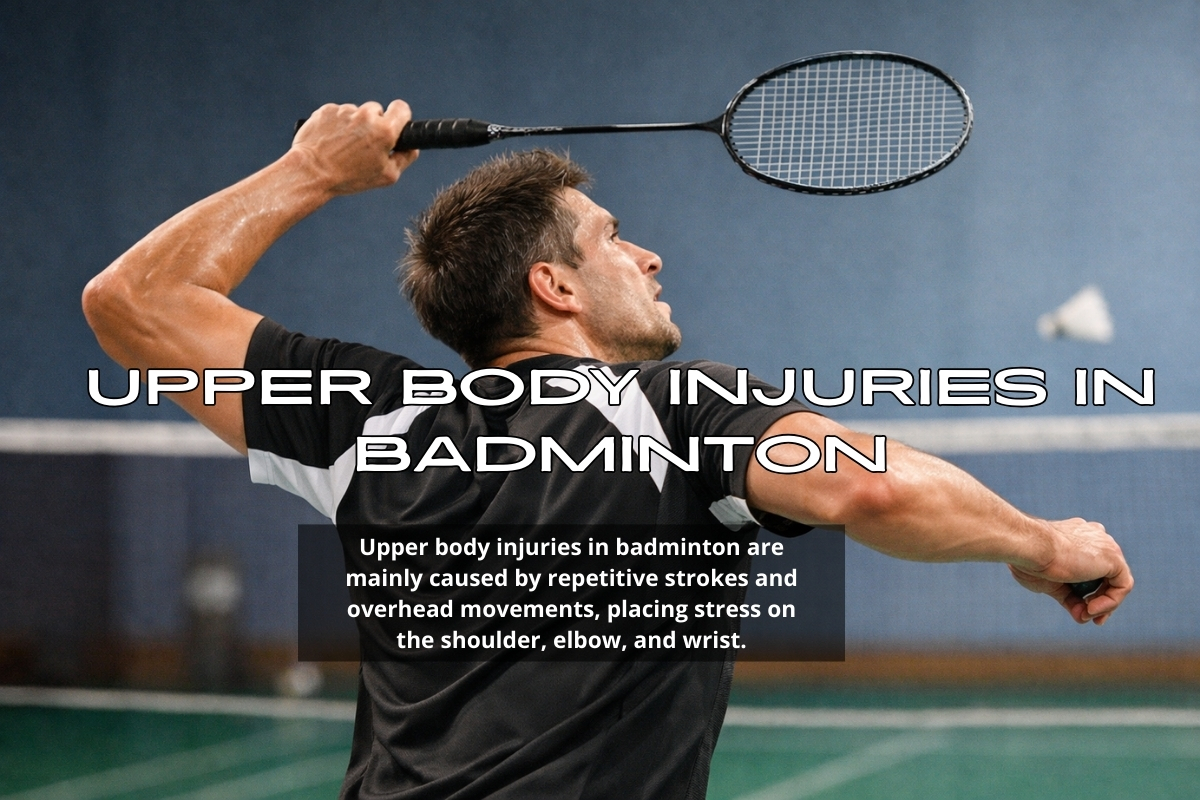
While badminton players put a lot of effort into strengthening their lower body, it is equally important to recognize the stress placed on the upper body during smashes, drives, and overhead shots. Proper posture and balance are crucial to avoid strain.
Here are some common upper-body injuries that may occur in badminton players:
1. Tennis Elbo:
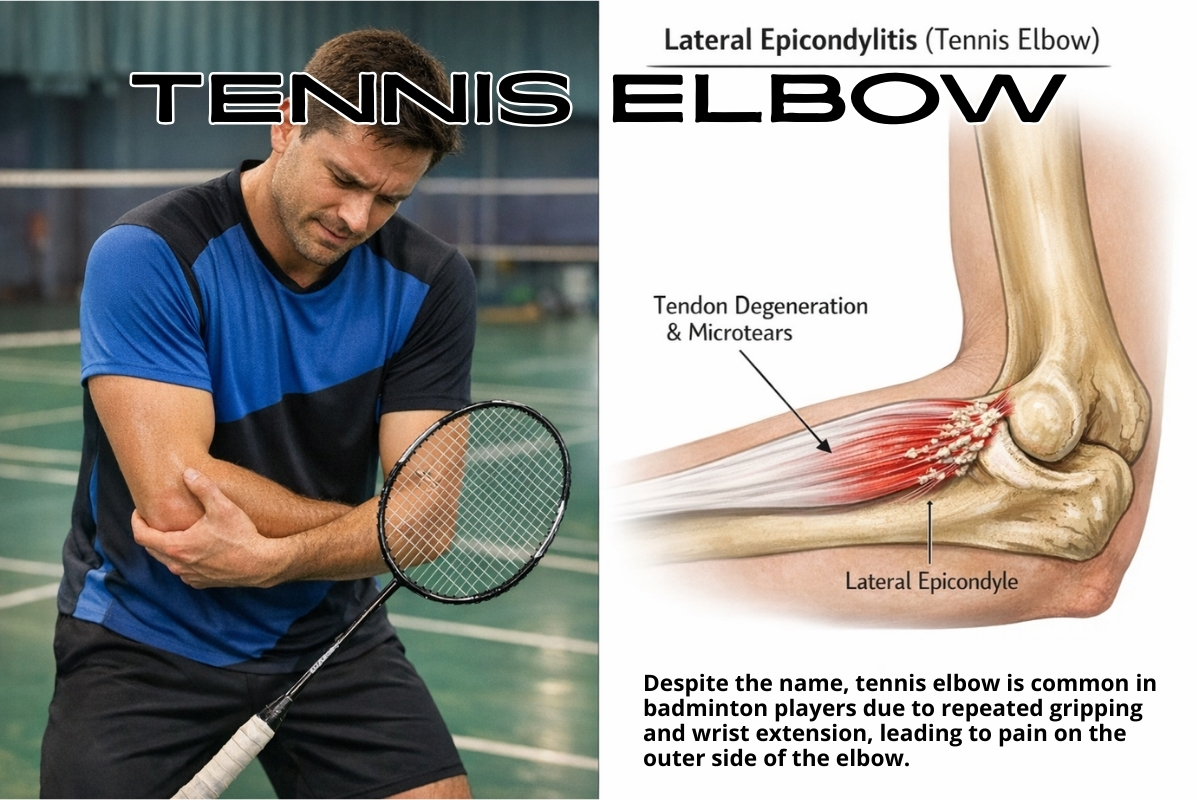
Badminton is a sport where the forehand is used extensively in almost every shot. Tennis elbow is a condition caused by inflammation around the lateral epicondyle. It is one of the most common sports injuries seen in badminton and tennis, especially among players who frequently rely on forehand strokes.
Common symptoms of Tennis Elbo:
Pain while playing forehand shots or making smashes
Severe pain around the elbow
Discomfort while gripping the racket
Pain while bending the arm
Prevention:
Avoid repetitive strain: Change your workout routine to balance your usual training and give your arm rest. Use an elbow support.
-Stretch regularly: Do arm and shoulder stretches like arm flexion, wrist flexion, and other exercises to strengthen your forearm before and after playing.
Take breaks: If your arm feels sore during practice or a match, pause and rest instead of pushing through.
Check your technique: Wrong techniques (like using a racket with too high tension) can cause long-term damage. Learn proper methods from a professional coach.
2. Shoulder Pain or (Rotator Cuff Injury):
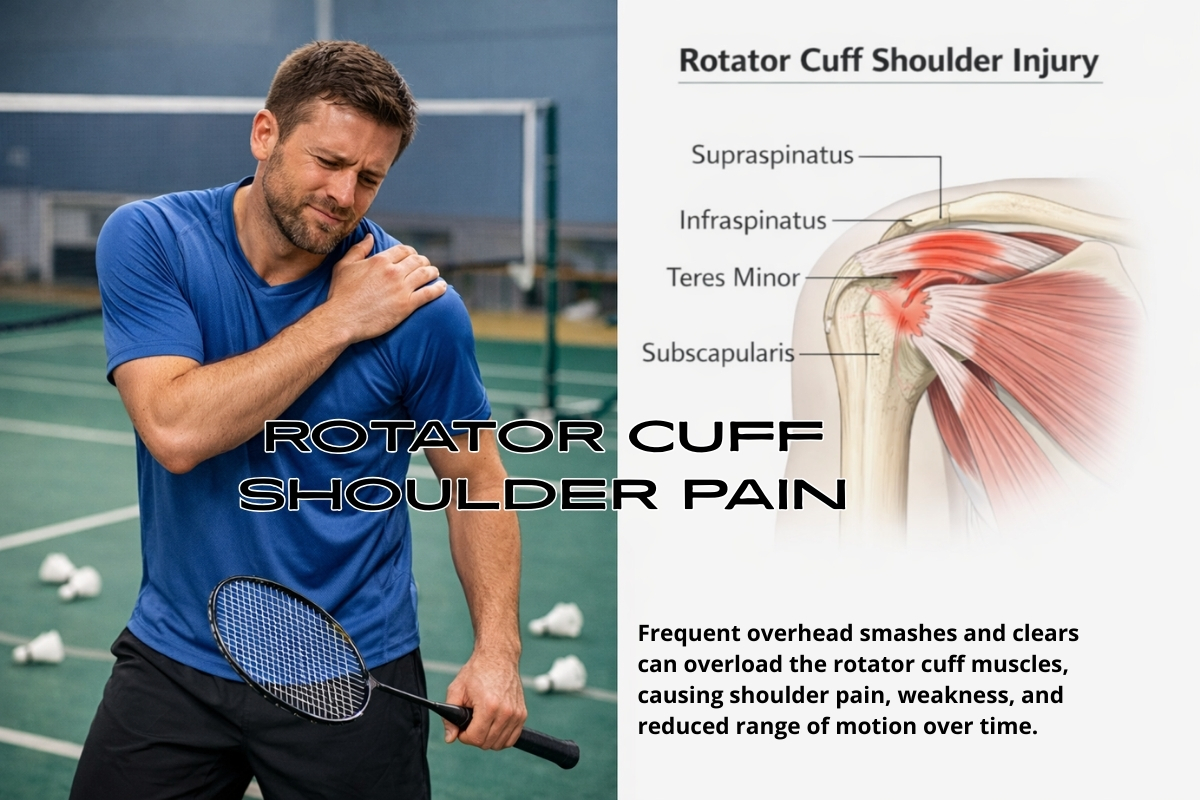
The rotator cuff is a group of muscles that stabilize the shoulder joint and support its movement. Repeated and fast overhead actions, such as clear shots, smashes, or back-court clears, can lead to irritation, inflammation (tendonitis), or small tears in these muscles and tendons. This often results in shoulder pain or rotator cuff injuries.
Common symptoms of Shoulder Pain:
Pain may worsen at night.
Discomfort when raising or lowering the arm, or while playing shots like overheads, clears, smashes, or drives.
Can feel like a dull, deep ache or sometimes a sharp pain with movement.
Prevention:
Focus on correct stroke technique and proper shoulder rotation to reduce strain on the rotator cuff.
Warm up thoroughly before stepping on court or starting a match, especially the shoulders and upper back.
Strengthen the shoulder and rotator cuff muscles regularly; avoid using an overly heavy racket, as it can increase shoulder stress.
3. Wrist Pain:
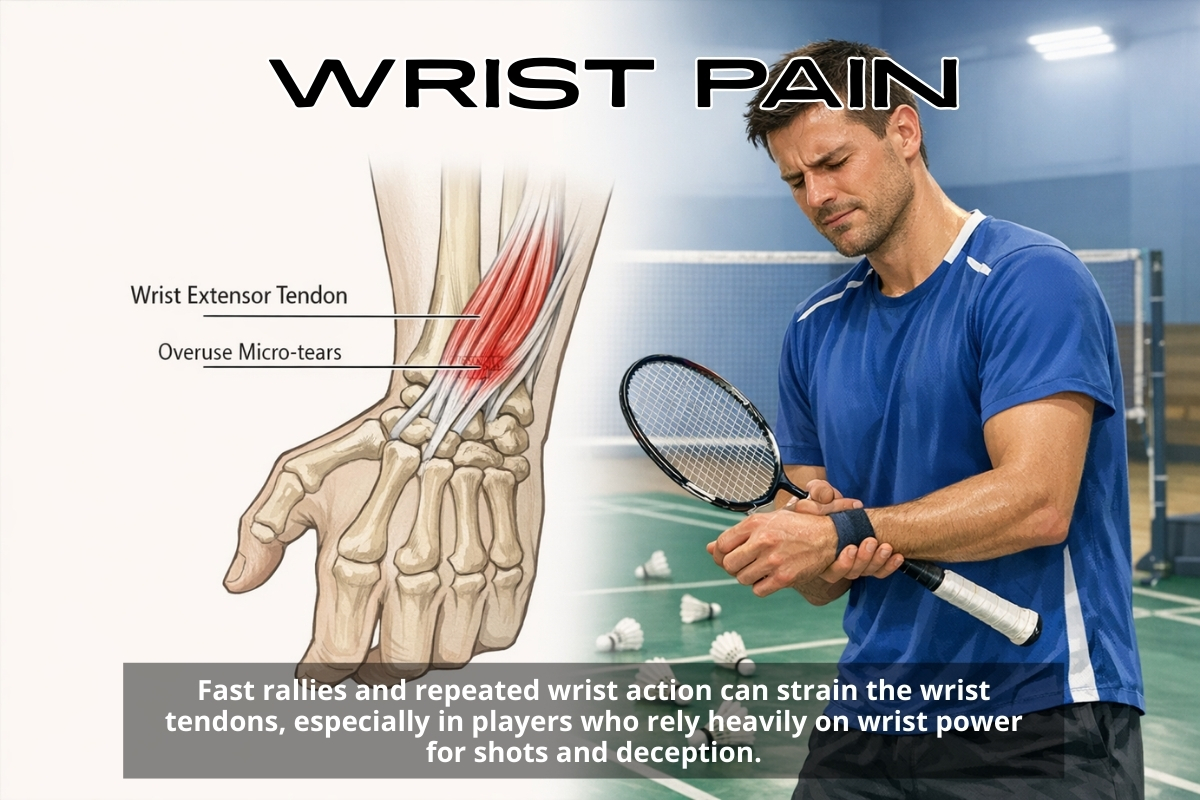
Using the wrong technique while gripping the racket can put unnecessary strain on the wrist. When players hold the racket too tightly, or in an incorrect position, it reduces flexibility and increases pressure during powerful strokes. Over time, this improper grip can affect the natural movement of the wrist and make it more vulnerable to stress.
As a result, shots like drives, smashes, or powerful back-court clears can lead to pain or even wrist injuries. Correct grip technique not only helps in preventing such injuries but also improves control, power, and overall performance on the court. Learning the right way to hold the racket is essential for both safety and efficiency
Common symptoms of Wrist Pain:
Swelling around the wrist with pain while moving it up or down
Redness or discoloration in the wrist, with severe pain on touch
Stiffness while trying to move the wrist
Pain when applying load or pressure on the wrist
Prevention:
Use the correct grip technique and avoid holding the racket too tightly.
Warm up the wrist properly before playing and stretch after the game.
Strengthen the wrist and forearm muscles and avoid overuse during long sessions.

Summary:
In this blog, we have tried to give a clear and practical overview of common badminton injuries, their main causes, and the best ways to prevent them. Most injuries in badminton are not sudden accidents; they usually develop over time due to improper training, incorrect technique, or lack of adequate warm-up before playing.
One of the most important points across all injuries is the need for structured training and learning the right movement and stroke techniques from the beginning. A proper warm-up prepares the muscles and joints for intense movement and significantly reduces the risk of strain. Players should also listen to their body. If pain or discomfort appears in any part of the body, it is better to take rest for a few sessions or play under proper monitoring instead of pushing through the pain. Additionally, choosing the right badminton shoes with good cushioning and support plays a key role in reducing impact-related injuries.
We hope this blog helps players enjoy an injury-free badminton journey for a long time.





Comment(s)
Reader Comments
1 comment
Leave a Comment
Your email address will not be displayed publicly.