
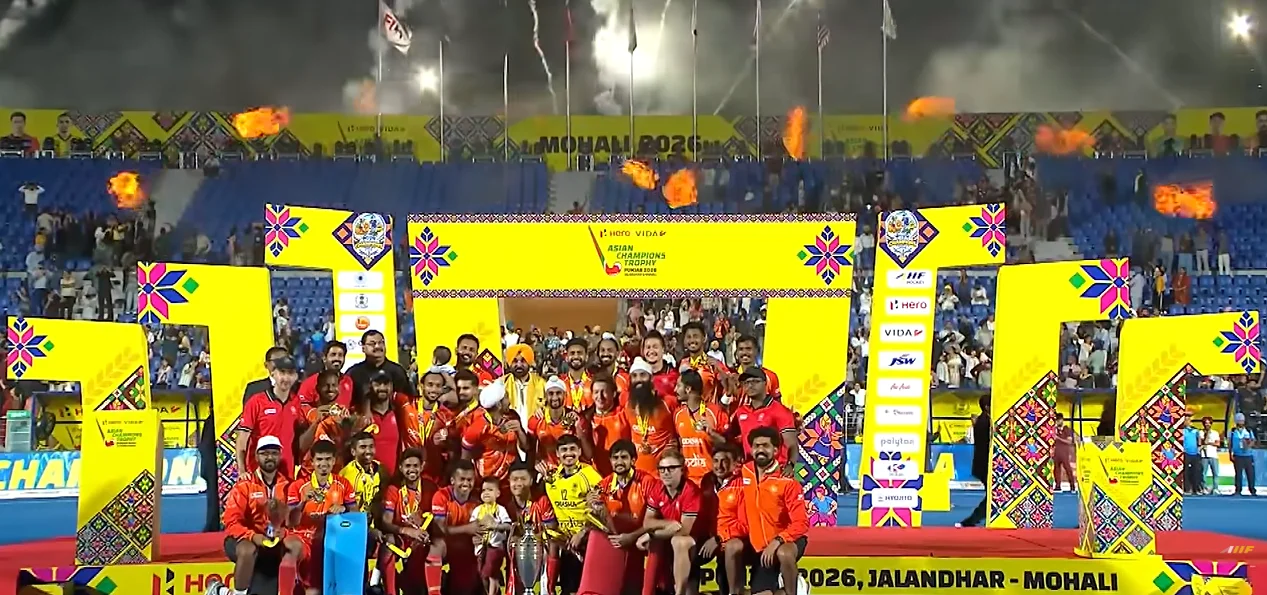
India are the undisputed champions of Asian men's hockey. But the most encouraging part of their 2026 Asian Champions Trophy triumph is not simply the trophy—it is the way they are learning to win.
On 5 November 2026 in Mohali, India defeated Japan 4–1 in the Hero Asian Champions Trophy Punjab final. The score suggests a comfortable evening. The match was anything but comfortable for more than half its duration. Japan struck in the third minute and defended their lead until the 42nd. India then found four goals, including three in a devastating six-minute stretch of the final quarter.
That is what makes this final worth studying. The old Indian gift for stick skill has not disappeared. What has changed is the growing emphasis on releasing the ball early, moving into space and attacking as a connected unit. To me, that is the more interesting story—and the one that matters when India face Europe's strongest teams.
India vs Japan Final: From Early Shock to a Four-Goal Comeback
Japan were not in Mohali merely to make up the numbers. Kazumasa Matsumoto punished India early with a reverse-stick finish in the third minute. Japan's compact defending subsequently forced Indian attackers to work for every opening. Despite 11 circle entries in the opening two quarters, India did not win a single penalty corner before half-time.
The breakthrough came in the 42nd minute. Following a penalty-corner sequence and a clever move near the baseline, Aditya supplied the ball for Shilanand Lakra to turn home the equaliser. It was a scrappy, intelligently worked team goal rather than a spectacular solo run. Sometimes those are the goals that reveal the most about a team's maturity.
In the 48th minute, Hardik Singh kept an attack alive after an initial pass was blocked and found Dilpreet Singh, who turned and finished. Jugraj Singh then scored from a penalty-corner drag-flick in the 53rd minute. Just one minute later, Sukhjeet Singh redirected Vivek Sagar Prasad's delivery to make it 4–1.
| Minute | Scorer | What happened |
|---|---|---|
| 3' | Kazumasa Matsumoto (Japan) | Early reverse-stick strike |
| 42' | Shilanand Lakra (India) | Equaliser from a worked attacking sequence |
| 48' | Dilpreet Singh (India) | Quick finish after Hardik recovered possession |
| 53' | Jugraj Singh (India) | Penalty-corner drag-flick |
| 54' | Sukhjeet Singh (India) | Deflection from Vivek Sagar Prasad's delivery |
The Most Important Improvement: Passing Faster Than Defenders Can React
Indian hockey has always produced players capable of beating opponents with extraordinary dribbling. There is still a place for that skill. But against elite opposition, carrying the ball through two or three defenders can allow the entire defensive block to reset.
The better option is often simpler: receive, look up, release and move again. A pass travels faster than a player can run. When the ball moves quickly across the pitch, defenders must turn, communicate and change their marking positions. That is when small gaps become dangerous.
Look at the goals from the final. Hardik's recovery and pass to Dilpreet, Aditya's cut-back for Shilanand and Vivek's delivery for Sukhjeet were all examples of collective attacking decisions. The scorer gets the headline, but the movement before the finish creates the chance.
My view: India should not abandon dribbling; they should make it selective. Beat a defender when it creates a numerical advantage. Otherwise, let the ball do the running. This balance of individual flair and quick combination play is what can make India more difficult to defend against.
Penalty Corners: Better Weapons, but Conversion Still Matters
Penalty corners can decide tight international matches. India have a major weapon in captain Harmanpreet Singh, whose 10 tournament goals earned him the top-scorer honour and helped him win the Hero of the Tournament award. Jugraj's 53rd-minute drag-flick in the final demonstrated that India's threat is not limited to one specialist.
Yet we should be precise about what happened against Japan. India's equaliser developed from a penalty-corner phase, but Shilanand's final touch was not a direct drag-flick conversion. Jugraj scored the clearly identifiable direct penalty-corner goal. India also saw Harmanpreet's efforts saved by Japanese goalkeeper Kisho Kuroda.
For the next stage of progress, India need variety: a reliable direct flick, well-rehearsed slips and deflections, second-ball reactions, and a plan when opponents rush the first shot. More importantly, the coaching staff should track goals per penalty corner earned across matches against leading nations rather than judging efficiency from a few memorable goals.
An Unbeaten Journey Through Punjab
India did not arrive in the final on the strength of one good performance. They won all five round-robin matches and then overwhelmed South Korea 8–1 in the semi-final. They had already beaten Japan 4–1 in the league stage, but the final showed why past results do not guarantee an easy rematch.
Against South Korea in the semi-final, India demonstrated how effective their attacking combinations can become when they play with rhythm. Against Japan in the final, they showed a different quality: patience under pressure. A strong team needs both.
The tournament also provided a meaningful farewell for Nilakanta Sharma, who ended his international career with another Asian title. Hardik Singh reached his 200th senior international appearance, while Krishan Bahadur Pathak was named Goalkeeper of the Tournament. These achievements show the importance of experience, leadership and defensive stability alongside attacking talent.
One Young Fan Reminded Us What This Victory Means
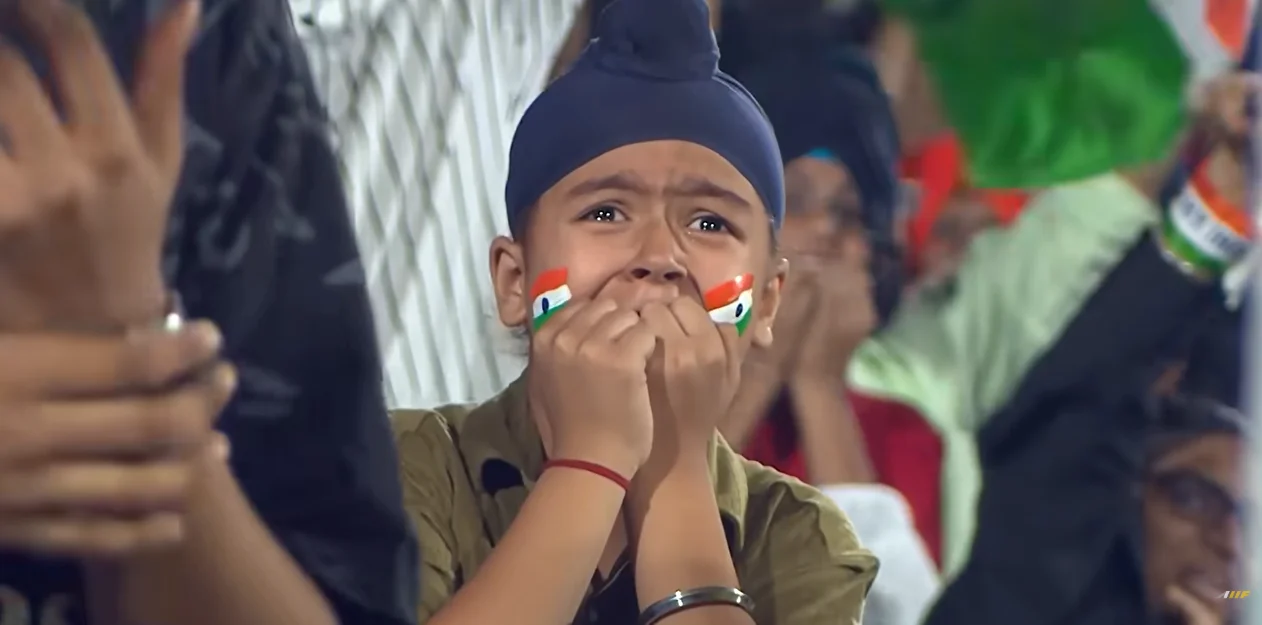
Amid the tactics, penalty corners and scoreboard, one image from the final's highlights deserves attention: a young Indian supporter, visibly emotional and crying after India scored their first goal. It is a small human moment in a very big sporting occasion.
That reaction captures something no match statistic can measure. Hockey is not only a contest of speed and technique; for generations of Indian supporters, it carries memories, expectations and national pride. If the crowd shot is confirmed in the original broadcast, the child’s reaction is a reminder of how deeply the sport still connects with its audience.
We should be careful not to invent what the child was thinking. But the scene itself offers a powerful message: India's next generation is watching, caring and finding heroes on a hockey field.
Can India Compete With Europe's Fastest Hockey Teams?
Winning Asia consistently is an achievement. Beating the Netherlands, Germany or Belgium when the stakes are highest is a different examination. These teams can punish slow decisions, weak rest-defence and even brief lapses in marking. India have the talent to compete; the challenge is to reproduce their best hockey under sustained elite pressure.
| Area | What India showed in Punjab | What must improve against elite opposition |
|---|---|---|
| Ball movement | Effective combinations and decisive late passing | One- and two-touch execution under aggressive pressing |
| Penalty corners | Multiple scoring threats and strong specialist talent | Consistent conversion against world-class rushers and goalkeepers |
| Defensive transitions | Recovery after conceding an early goal | Preventing counterattacks immediately after losing possession |
| Attacking structure | Smart baseline play and deflections | More repeatable circle entries against compact elite defences |
| Match control | Patience and late-game finishing | Starting faster and controlling all four quarters |
The European game is not simply about running faster. It is about positioning early, moving the ball before pressure arrives and maintaining the team's shape while attacking. India should learn from those habits without sacrificing the creativity that makes Indian hockey distinctive.
Three Priorities for the Next Phase
First, quicker decisions under pressure. Training should reward receiving on the move, passing into the next player's path and offering immediate support. The ball should rarely stop unnecessarily.
Second, more ruthless circle play. India must turn promising attacks into shots, rebounds and penalty corners. Against a top-ranked opponent, a team may not get many clean opportunities.
Third, stronger defensive transitions. When an attack breaks down, the nearest players must press while the rest protect central spaces. This is where high-level matches can be won or lost within seconds.
What Young Indian Players Can Learn From This Team
Young players often practise dribbling because it looks impressive. But this tournament offers a more valuable lesson: great hockey requires timing, awareness and teamwork. Practise receiving with your body already facing the next passing option. Learn to make a supporting run immediately after releasing the ball. Work on first-touch control, short passing under pressure and deflections near goal.
For players learning the game, equipment matters too: choose a stick that suits your height, strength and level rather than assuming a heavier stick produces better shots. Khelmart has a dedicated hockey sticks collection for players exploring suitable options. But the biggest improvement will still come from first-touch control, scanning before receiving and accurate passing under pressure.
The Future of Indian Hockey: Asia Is the Foundation, Not the Finish Line

India's sixth Asian Champions Trophy should be celebrated fully. An unbeaten campaign, a comeback in the final and a third straight title are not minor achievements. Yet the more ambitious question is what this group can become beyond Asia.
My assessment is optimistic but measured. India are building the ingredients of a modern international side: experienced leaders, specialist penalty-corner options, technically gifted forwards and an increasingly collective attacking style. The final also exposed weaknesses—a slow start, difficulty breaking a compact defence early and missed chances from set pieces.
That is not a contradiction. It is precisely why the result matters. Champions do not need to be perfect; they need to recognise where the next improvement must come from.
India have conquered Asia again. The next challenge is not to imitate European hockey, but to combine European-level tempo and tactical discipline with India's own instinctive skill. If they can do that consistently, they will not merely compete with the world's best. They can make those teams adapt to India.
Image reference: AsianHockey — Official YouTube Channel.


Comment(s)
No comments yet
Be the first to share your thoughts about this article.
Leave a Comment
Your email address will not be displayed publicly.