
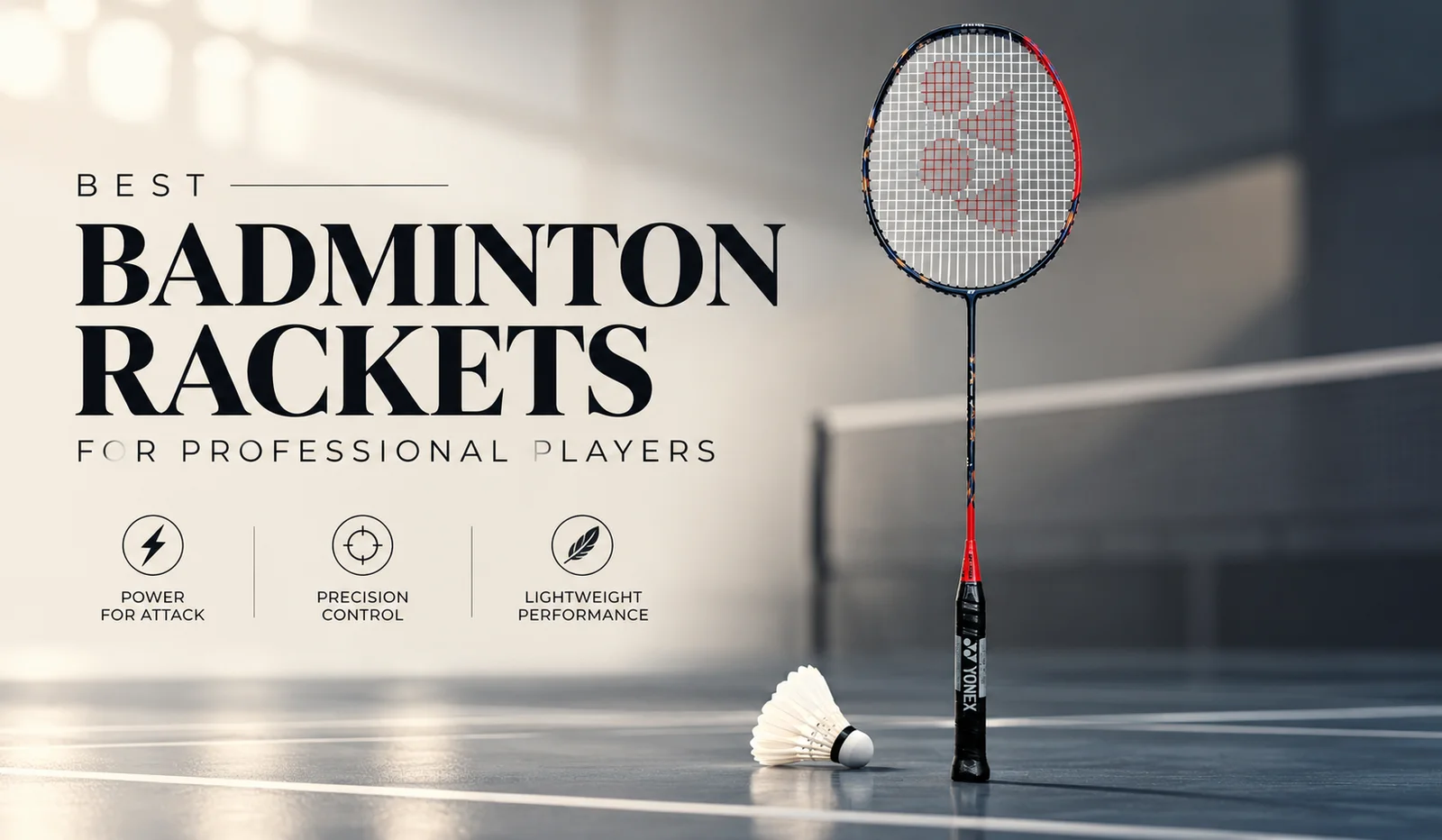
Top 10 Best Badminton Rackets for Professional Players in 2027
By Subham Sarkar, Sports Blogger & Equipment Reviewer at Khelmart

What is the best badminton racket for a professional player in 2027? There is no single answer: the Yonex Astrox 100 ZZ is a compelling choice for aggressive singles, the Arcsaber 11 Pro for control and the Nanoflare 1000 Z for fast doubles. The best choice depends on swing mechanics, court role, timing and physical comfort. This guide compares ten premium rackets, explains their trade-offs and helps advanced and intermediate players decide whether a flagship model is worth its price. Browse Yonex rackets.
Top 10 professional badminton rackets: quick comparison
| # | Racket | Typical balance | Typical shaft feel | Best for |
|---|---|---|---|---|
| 1 | Yonex Astrox 100 ZZ | Head-heavy | Extra stiff | Attacking singles and explosive steep smashes |
| 2 | Yonex Astrox 99 Pro | Head-heavy | Stiff | Sustained attacking pressure and heavy overhead shots |
| 3 | Yonex Arcsaber 11 Pro | Even-balanced | Stiff | Placement, stability and all-round control |
| 4 | Yonex Nanoflare 1000 Z | Head-light leaning | Extra stiff | Fast handling and explosive drives |
| 5 | Yonex Astrox 88D Pro | Head-heavy | Stiff | Rear-court doubles and follow-up attacks |
| 6 | Li-Ning Axforce 90 Dragon | Head-heavy | Stiff | Aggressive overhead attacking play |
| 7 | Li-Ning Halbertec 9000 | Even-balanced | Stiff | Balanced play and directional control |
| 8 | Victor Thruster F Enhanced Edition | Head-heavy leaning | Stiff | Solid attacking shots and steep overheads |
| 9 | Victor Auraspeed 90K II | Speed-oriented / near even | Stiff | Fast doubles, flat exchanges and counterattacks |
| 10 | Yonex Nanoflare 800 Pro | Head-light leaning | Stiff | Fast defence, interceptions and drive rallies |
Balance and flex descriptions are broad editorial summaries; production generation, regional edition and weight variant may affect the precise specifications. Check the exact model and variant before purchase. Prices are deliberately omitted pending live Indian listing verification.
Detailed reviews: which player suits each racket?
1. Yonex Astrox 100 ZZ
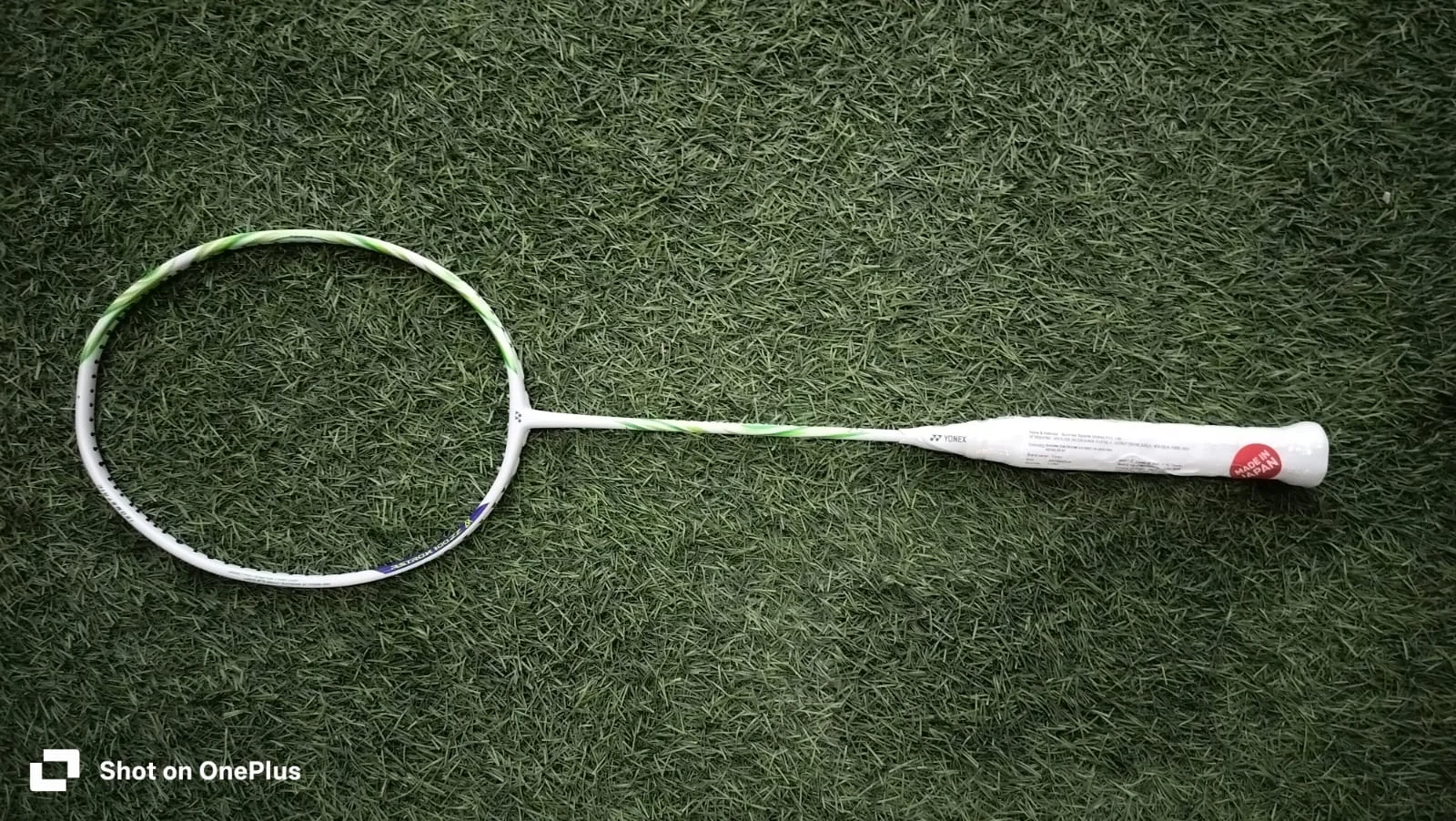
The 100 ZZ rewards decisive acceleration and a clean contact point. Its extra-stiff shaft and head-heavy profile make the timing window demanding, especially when defending late or recovering after a full smash. The 2026 Yonex catalogue lists 3U and 4U options; choosing 4U can make repeated exchanges easier, while 3U gives a more substantial feel.
Best suited to: Strong singles attackers with reliable technique; advanced doubles players who prefer a heavy hitting sensation. Watch out: A recreational player who struggles with late backhands may find it unforgiving.
2. Yonex Astrox 99 Pro
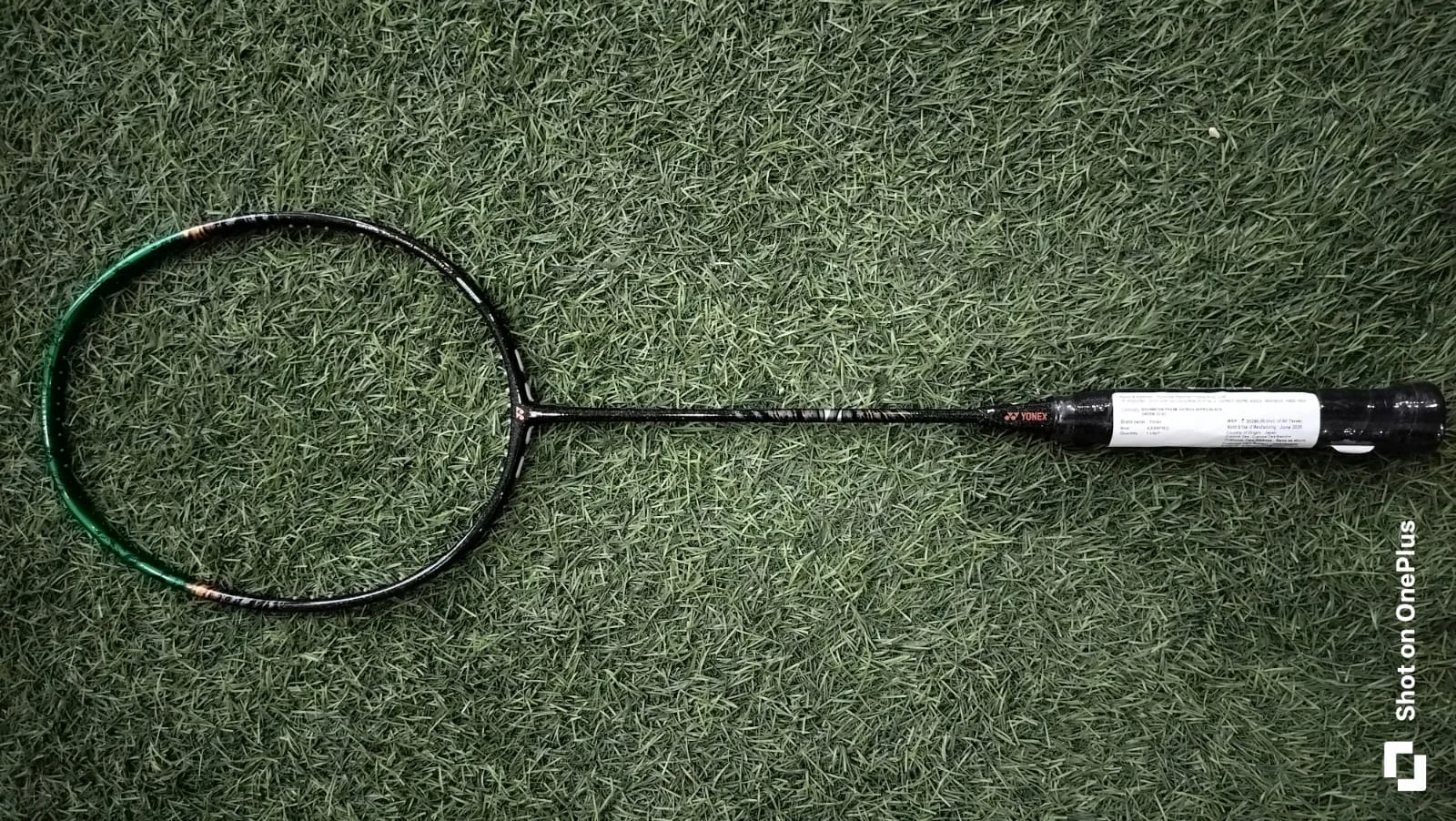
The Astrox 99 Pro is designed around rear-court pressure and weight behind overhead shots. It suits players who create openings through deep clears, punch clears and steep smashes rather than purely through flat speed. The current third-generation 3AX99-P differs from earlier AX99-P versions, so specifications and photos must match the exact SKU.
Best suited to: Attacking singles players who can maintain racket preparation during long rallies. Watch out: A head-heavy racket can increase recovery demands in fast doubles.
3. Yonex Arcsaber 11 Pro
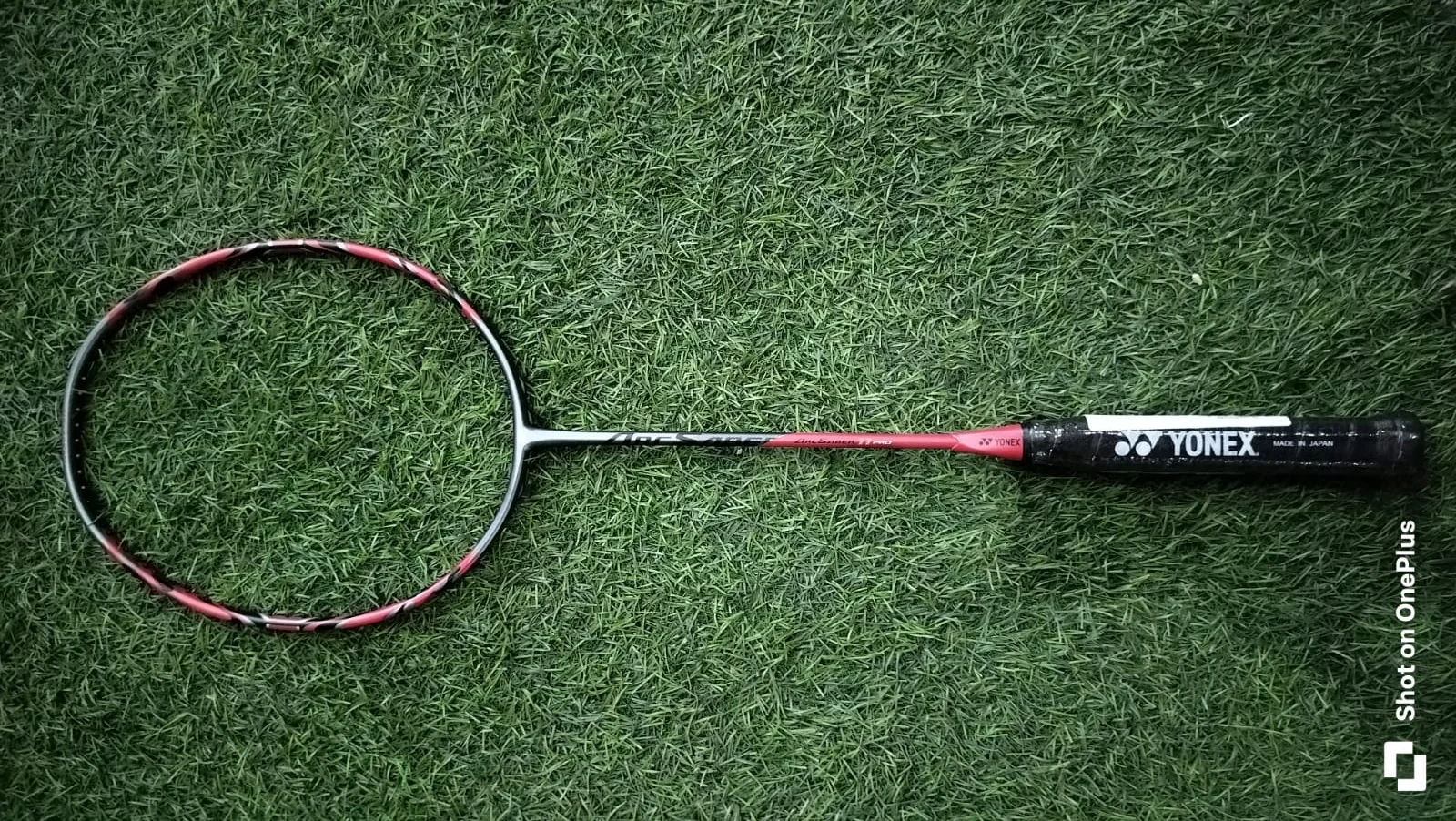
The Arcsaber 11 Pro emphasises a stable, predictable hitting response. It is a useful benchmark for players who win through length, placement, blocks and precise counterattacks rather than maximum head-heavy sensation. Its even-balanced design makes it versatile across court positions.
Best suited to: Advanced all-round singles players and doubles players who value accurate directional changes. Watch out: It will not mimic the pendulum-like feel of the most head-heavy models.
4. Yonex Nanoflare 1000 Z
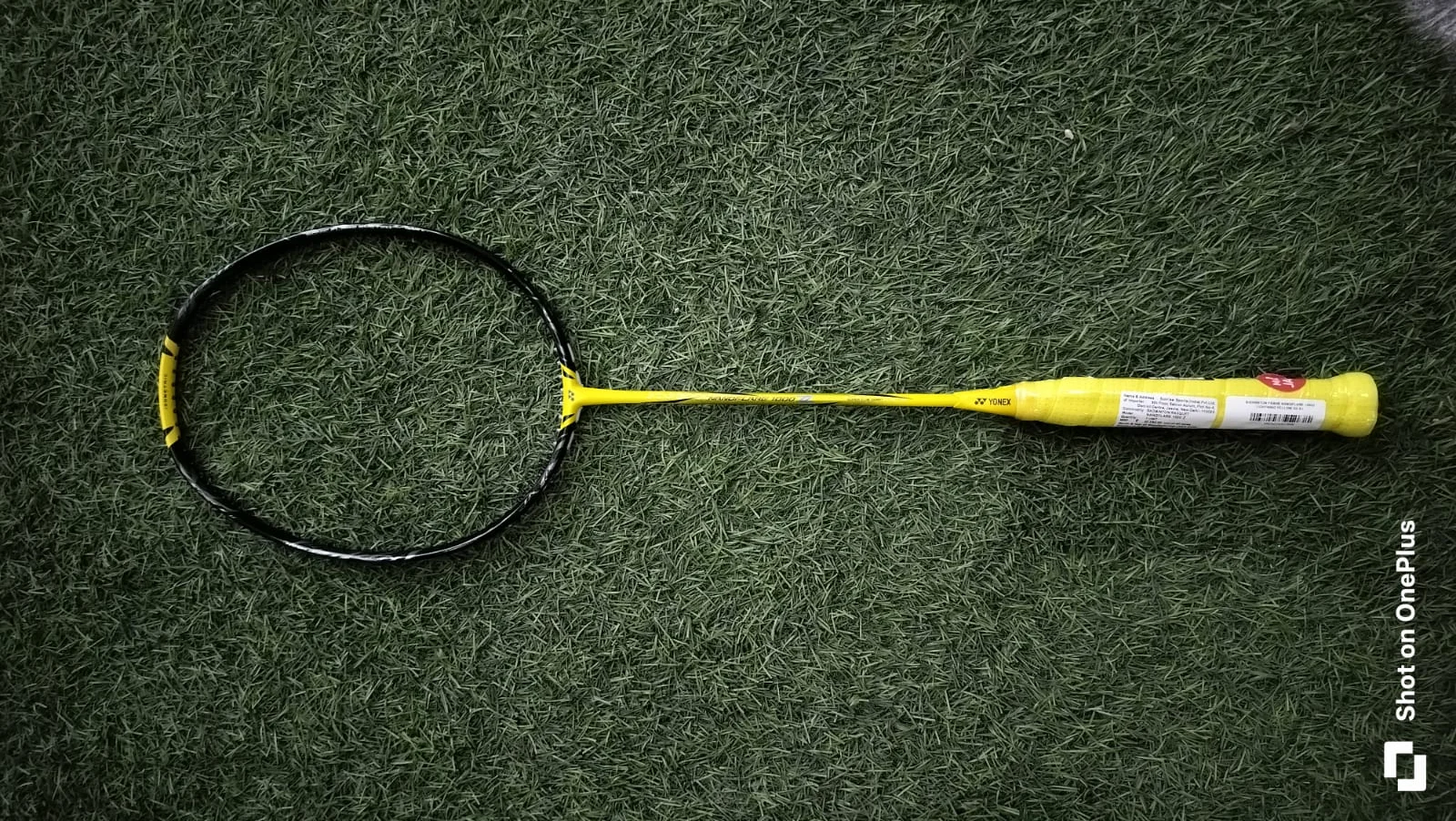
The Nanoflare 1000 Z is an unusually demanding speed-oriented flagship: the extra-stiff shaft still asks for excellent timing. Quick interception, fast drive preparation and compact wrist-and-forearm acceleration are its strengths, but speed-oriented does not mean automatic power.
Best suited to: Technically skilled doubles players and singles counterattackers who can create racket-head speed. Watch out: Players relying on a slow, sweeping swing may prefer a more flexible frame.
5. Yonex Astrox 88D Pro (3rd Gen)
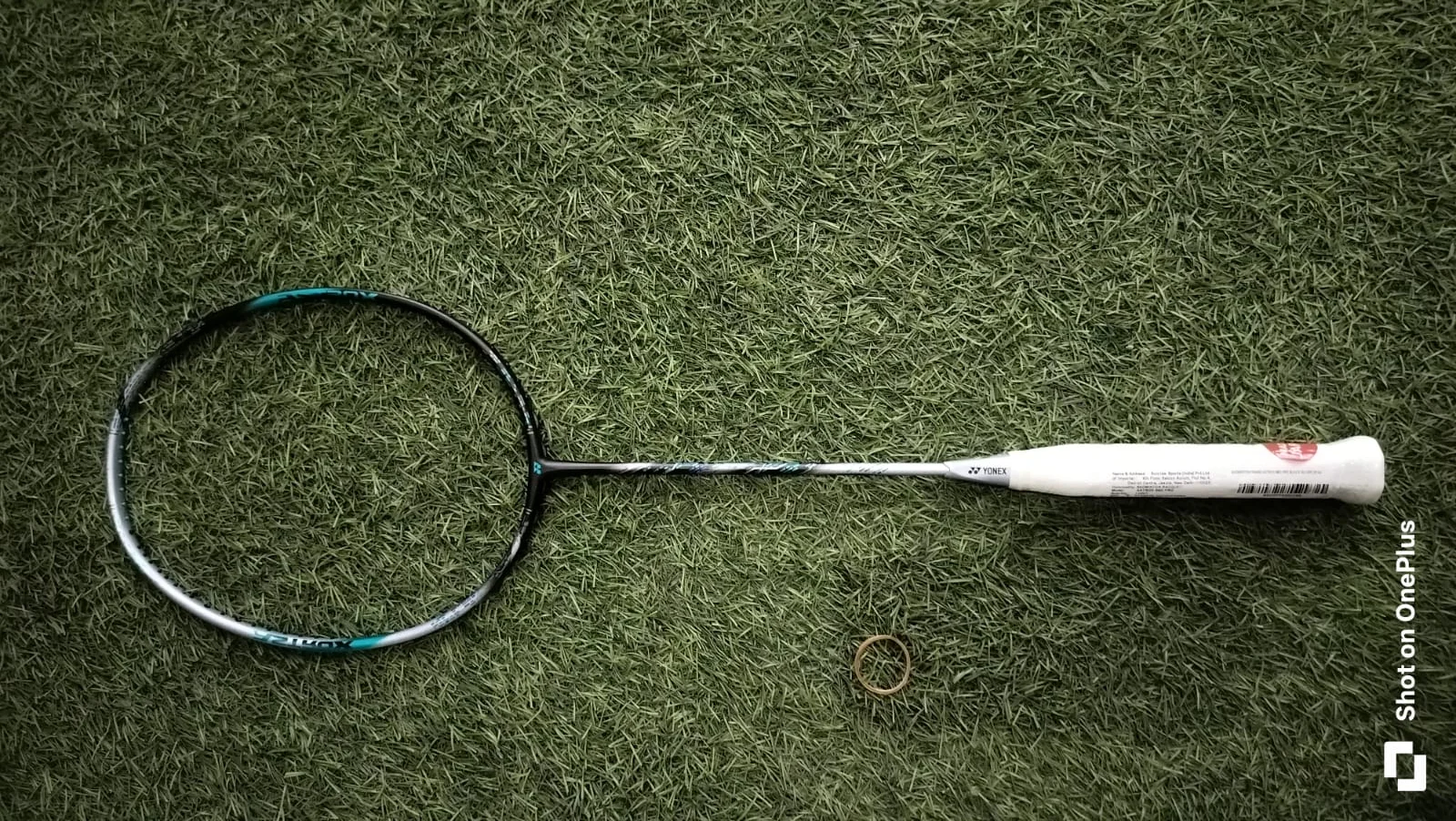
The 88D Pro is built around repeated rear-court doubles attacks, where a player must smash, follow up and cover the next lift. It is often more logical for a dedicated doubles back-court hitter than choosing a singles-oriented flagship purely on reputation.
Best suited to: Rear-court doubles specialists and attacking all-rounders. Watch out: Front-court specialists may prefer faster recovery in a more neutral or head-light frame.
6. Li-Ning Axforce 90 Dragon
The Axforce 90 Dragon family prioritises a forceful overhead feel. Check whether a seller lists the original Dragon, Dragon Max or another edition: Li-Ning product pages distinguish these names and can list different shaft descriptions. Do not assume specifications transfer between versions. Browse Li-Ning rackets.
Best suited to: Advanced attackers who like a pronounced head-heavy response. Watch out: Players prioritising rapid flat defense should compare weight and swing feel carefully.
7. Li-Ning Halbertec 9000
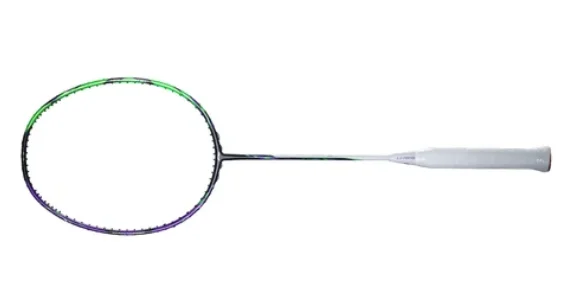
The Halbertec 9000 is positioned for controlled, balanced exchanges rather than a single extreme strength. Its appeal is the ability to move from clears and drives to tight placement without constantly compensating for a very heavy head.
Best suited to: All-round competitors who alternate singles and doubles or rotate court roles. Watch out: Players seeking the strongest head-heavy sensation may want an Axforce or Astrox.
8. Victor Thruster F Enhanced Edition
The Thruster F Enhanced Edition belongs to Victor’s attack-focused family. Its value lies in a solid impact sensation and confident overhead play; however, available editions and weight classes can change the actual handling. Compare the exact SKU rather than relying on the family name alone. Browse Victor rackets. Explore Victor badminton rackets.
Best suited to: Power-focused doubles players and confident singles attackers. Watch out: Players with slower preparation may find an attack-biased racket demanding.
9. Victor Auraspeed 90K II
The Auraspeed 90K II is a compelling doubles option for flat exchanges, interceptions and immediate racket recovery. It is more about keeping pressure through quick sequences than maximizing the feeling of head mass on one full smash. Explore Victor badminton rackets.
Best suited to: Fast doubles specialists, counterattackers and players who take the shuttle early. Watch out: Singles players who prefer a very heavy overhead sensation may want another balance.
10. Yonex Nanoflare 800 Pro
The Nanoflare 800 Pro favors defensive reaction, fast drives and compact counterattacks. It can be especially useful when a player loses points because the racket is late rather than because the smash lacks force.
Best suited to: Defensive doubles players, front-court interceptors and speed-based attackers. Watch out: Power-focused singles players should compare it with a head-heavy alternative.
Visual comparison: power, swing speed, shaft stiffness and control
Each chart uses a 1–10 illustrative editorial scale to compare intended playing characteristics. The scores are subjective, based on relative balance, shaft feel and intended court role, and should not be interpreted as precise measured differences. These are not laboratory results, measured smash speeds, or independent product test scores. Differences in player technique, strings and racket variants can change real-world results.
Smash power / attacking suitability
Swing speed / handling potential
Shaft stiffness / firm response
Control / placement suitability
Why are professional badminton rackets so expensive?
Professional-grade badminton rackets often cost more because manufacturers invest in tighter material selection, advanced carbon-fibre layups, shaft engineering, frame geometry and manufacturing consistency. A premium frame may be designed to resist twisting during off-centre impacts, return predictably after high-speed swings and balance stiffness against weight. These engineering choices can matter during repeated high-intensity rallies.
But price is not a direct measurement of power. Marketing, import duties, distribution, limited editions and branding also influence retail prices. A ₹20,000 racket will not automatically outperform a ₹7,000 racket in the hands of every player. String choice, tension, technique and the player's ability to reach the shuttle early can make a larger practical difference.
Is an expensive professional racket worth buying for an intermediate player?
Sometimes—but only if the racket matches the player's technique and needs. A technically confident intermediate player who trains regularly may appreciate the stable feel of an Arcsaber-style even-balanced frame or a manageable speed-oriented racket. A developing player who frequently hits late, struggles to clear from the rear court or suffers arm fatigue may find an extra-stiff flagship model unnecessarily demanding.
Instead of asking whether a racket is “professional”, ask: Can I consistently hit a full-length clear without forcing my arm? Can I defend three fast drives in succession? Does my timing stay reliable after an hour of play? Does the grip and weight feel comfortable? Try the racket with a familiar string and tension if possible. An appropriately matched mid-priced racket often provides better value than an unsuitable flagship.
Why do many professional players prefer stiff shafts?
A stiff shaft bends less under the same load and can give a strong, fast-swinging player a direct, repeatable response. For athletes who accelerate the racket sharply and meet the shuttle consistently in front of the body, this can support precise directional control and predictable timing during high-speed exchanges. It can also feel stable when redirecting hard smashes or playing quick drives.
However, stiffness does not create power on its own. The shaft stores and returns energy only when it bends and recovers in sync with the player's swing. A slower swing or late contact may not load an extra-stiff shaft effectively; a medium-flex racket can feel easier to clear with. Some professionals also choose medium-stiff or more flexible models depending on their technique, injury history and playing style. Stiffness labels differ between brands and should not be treated as standardised laboratory measurements.
How to interpret power, swing speed, stiffness and control
Smash power in these charts means the racket's suitability for forceful attacking strokes, not measured shuttle speed. Swing speed means perceived handling potential from design and balance, not an instrument-recorded speed. Shaft stiffness is an editorial positioning of the manufacturer's stated or commonly described flex category, and control refers to the suitability for accurate, repeatable placement.
These four qualities interact. A head-heavy racket may assist momentum in overhead strokes but demand more effort to reverse direction. A head-light design can be easier to reposition for defence, yet some players prefer more mass at the head for a solid smash. An even-balanced racket can provide a useful compromise. A smaller score difference should never be read as a scientifically proven performance gap.
Singles vs doubles: which design makes sense?
Singles often rewards accurate deep clears, disciplined length, stable overhead technique and efficient movement over longer rallies. An attacking singles player may enjoy the Astrox 100 ZZ or Astrox 99 Pro, while a placement-focused player might prefer the Arcsaber 11 Pro. Doubles brings faster flat exchanges, blocks, interceptions and rapid transitions. The Nanoflare 800 Pro, Nanoflare 1000 Z and Auraspeed 90K II are attractive choices for speed-oriented players; the Astrox 88D Pro is especially relevant to a rear-court doubles role.
These are tendencies, not rigid rules. An excellent doubles player can use a head-heavy racket effectively, and a singles player can succeed with a fast, lighter-feeling frame.
3U vs 4U, balance and string tension: what matters?
The common Yonex weight classes 3U and 4U broadly describe heavier and lighter racket ranges, but precise finished weight depends on grip, strings and model. A heavier version can feel more solid through contact; a lighter one may be easier to recover with. Balance matters just as much as total weight: two rackets of equal mass can feel very different if more mass is concentrated near the head.
String tension changes the feel of the string bed. Higher tension can produce a firmer, more precise response for players who consistently hit the sweet spot, but it usually offers less forgiveness. Lower tension may be more comfortable and forgiving for developing technique. Always follow the maximum tension for the exact racket variant, and remember that string type, gauge and condition matter too.
Which racket should you buy? Player-by-player summary
| Player profile | Recommended racket | Reason |
|---|---|---|
| Power-first singles attacker | Astrox 100 ZZ / Astrox 99 Pro | Attacking, head-heavy response |
| Rear-court doubles attacker | Astrox 88D Pro | Overhead pressure and follow-up attacks |
| Placement-focused all-rounder | Arcsaber 11 Pro / Halbertec 9000 | Balanced handling and control |
| Fast doubles defender | Nanoflare 800 Pro / Auraspeed 90K II | Quick handling and interceptions |
| Explosive fast doubles player | Nanoflare 1000 Z | Rapid drive exchanges |
| Power-focused Victor / Li-Ning buyer | Thruster F Enhanced / Axforce 90 Dragon | Firm attacking character |
| Intermediate player upgrading | Demo Arcsaber 11 Pro or Halbertec 9000 first | Assess timing and comfort before paying flagship prices |
Why are professional badminton rackets so expensive?
A premium racket does not simply contain “more graphite.” Price reflects a combination of carbon-fibre layup, frame moulding and dimensional consistency, reinforcement at high-stress areas, shaft construction, engineering development, manufacturing quality control, and brand/distribution costs. High-end frames are designed to deliver a particular combination of stability, feedback, recovery and swing characteristics while remaining light enough for competitive play.
However, the relationship between price and on-court performance is not linear. A racket costing twice as much will not produce twice the smash speed. Players pay for refinements in response and consistency, not guaranteed points. Correct string choice, string tension, footwork and contact quality often matter more than the last increment in racket price.
Should intermediate players buy an expensive professional racket?
Sometimes—but not simply because a professional uses it. An intermediate player with consistent overhead technique, a clear playing identity and the opportunity to test rackets may benefit from a flagship. An intermediate player still learning full-length clears, struggling with late contact or suffering fatigue from heavy frames will often improve faster with a medium-stiff, more forgiving racket.
You play regularly, can clear baseline-to-baseline without straining, know whether you prefer singles or doubles, and can explain what your present racket limits.
You choose by player endorsement, often mistime overheads, cannot maintain defensive readiness, or need to sacrifice coaching and shoes to afford the racket.
Practical test: Play at least three sessions with your current racket and record where points are lost: late defensive contact, short clears, inaccurate placement or slow recovery. Try a comparable 4U racket with suitable strings before concluding that a more expensive frame will solve the issue.
Why do many professional players prefer stiff shafts?
During a swing, a shaft bends and recovers. A stiffer shaft generally bends less under the same load, so players with fast, well-timed acceleration may experience a more immediate and predictable racket-head response. That helps with repeatable contact timing, directional control and rapid shot changes. Stiffness can also provide a crisp impact sensation valued by technically strong players.
But stiffness is not a shortcut to power. A shaft that is too stiff for a player's acceleration can feel unresponsive and may make full-length clears harder. A more flexible shaft can assist some players by bending more during a slower swing, although the timing of recovery must still match contact. Professional players do not all use extra-stiff shafts: choices depend on stroke mechanics, discipline, string setup and preference.
| Shaft feel | Typical benefit | Possible drawback | Consider if... |
|---|---|---|---|
| Extra stiff | Direct feedback and predictable timing for fast swings | Demands precise acceleration and contact | You consistently generate fast racket-head speed |
| Stiff | Firm response with some tolerance | Can still punish late strokes | You are an advanced, technically consistent player |
| Medium | More accessible power/comfort compromise | Less crisp for some very fast swings | You are progressing or play mixed styles |
| Flexible | Can help slower swings load the shaft | Timing may feel delayed for very fast hitters | You value ease of length and a softer response |
Balance point, swing weight and racket weight: what matters most?
Static weight is the mass of the unstrung racket. Yonex commonly describes 4U as approximately 83 g and 3U as approximately 88 g, although actual products vary. Balance point describes where weight is concentrated along the frame. Swing weight reflects resistance to rotation during a stroke; two 4U rackets can feel very different if their mass is distributed differently.
Head-heavy rackets can give a substantial overhead feel but may be slower to redirect. Head-light rackets are often easier to maneuver for quick drives and blocks. Even-balanced designs aim for versatility. None of these guarantees a certain smash speed: technique, racket-head velocity at contact and the player's ability to control the frame remain decisive.
String tension: avoid copying a professional's setup
Higher string tension can create a firmer response and may improve perceived precision when contact is consistently clean, but it generally reduces tolerance for off-centre hits. Lower tension may feel more forgiving and can help players who struggle to create length. The string model, gauge, tension loss and restringing quality also affect feel.
Use the manufacturer's recommended tension for the exact racket and weight variant. For example, Yonex lists 20–28 lb for the 4U Astrox 100 ZZ and 21–29 lb for its 3U variant. Those are product recommendations, not ideal tension targets for everyone. A player who lacks consistent contact should not choose 29 lb just because a professional uses high tension.
Which racket should you choose? Match your game, not a celebrity
| Your game | First models to compare | Why |
|---|---|---|
| Power singles, early contact | Astrox 100 ZZ, Astrox 99 Pro, Axforce 90 Dragon | Head-heavy attacking emphasis |
| All-round singles and placement | Arcsaber 11 Pro, Halbertec 9000 | Balanced, controlled response |
| Rear-court doubles | Astrox 88D Pro, Thruster F Enhanced | Overhead pressure and follow-up attack |
| Front/mid-court doubles | Auraspeed 90K II, Nanoflare 800 Pro | Fast redirection and interceptions |
| Fast, technically skilled counterattack | Nanoflare 1000 Z, Auraspeed 90K II | Rapid handling with precise timing demands |
| Intermediate moving to advanced | Test Arcsaber 11 Pro or Halbertec 9000, but also compare medium-stiff alternatives | A flagship is not automatically the most forgiving upgrade |
How to interpret the four performance graphs
Power represents attacking-oriented design and the potential for a forceful overhead feel, not measured shuttle speed. Swing speed represents relative handling potential, not a stopwatch result. Shaft stiffness is a relative feel category rather than a measured flex constant. Control represents a design-oriented judgement about stability and placement; actual accuracy depends heavily on the player.
Small differences such as 9.5 versus 9.6 should not be treated as meaningful evidence. Use the charts to identify broad trade-offs, then compare your preferred racket in the exact 3U/4U version with a consistent string setup.
Price and authenticity: what to check in India
Premium racket prices can change with model generation, importer, availability, discounts and stringing service. Before buying, confirm the complete model name and item code, 3U/4U variant, grip size, whether it arrives unstrung, recommended tension, seller authenticity and return conditions. Be particularly careful with listings that omit the generation of Astrox 99 Pro or the exact Axforce 90 Dragon edition.
For example, Khelmart's listed Yonex Astrox 99 Pro is a specific product listing; verify its version and live selling price before publishing or purchasing. This article deliberately does not invent current prices for the remaining nine rackets.
Ref:
Manufacturer references: Yonex 2026 badminton catalogue, Yonex Astrox 99 Pro (3AX99-P), Yonex Nanoflare 1000 Z, and Li-Ning Axforce 90 Dragon Max. Racket family comparisons and suitability recommendations are editorial interpretations, not manufacturer-issued cross-brand performance rankings. Recheck exact variant specifications before publishing.
Summary
The best professional badminton racket in 2027 is the one that lets you repeat your strongest strokes under pressure. For a trained attacking singles player, the Astrox 100 ZZ is an excellent starting point; for a control-first all-rounder, the Arcsaber 11 Pro is particularly appealing. Speed-oriented doubles players should compare the Nanoflare 800 Pro, Nanoflare 1000 Z and Auraspeed 90K II. A rear-court doubles specialist should give the Astrox 88D Pro serious consideration.
Intermediate players should not assume that buying the most expensive or stiffest racket will immediately improve their game. Spend time assessing swing timing, string tension, comfort and consistency. A racket that fits your current technique is usually a smarter purchase than one chosen for its professional label alone.
Explore badminton equipment and compare available models at Khelmart. Check product pages for current specifications, availability and prices.

Comment(s)
No comments yet
Be the first to share your thoughts about this article.
Leave a Comment
Your email address will not be displayed publicly.