
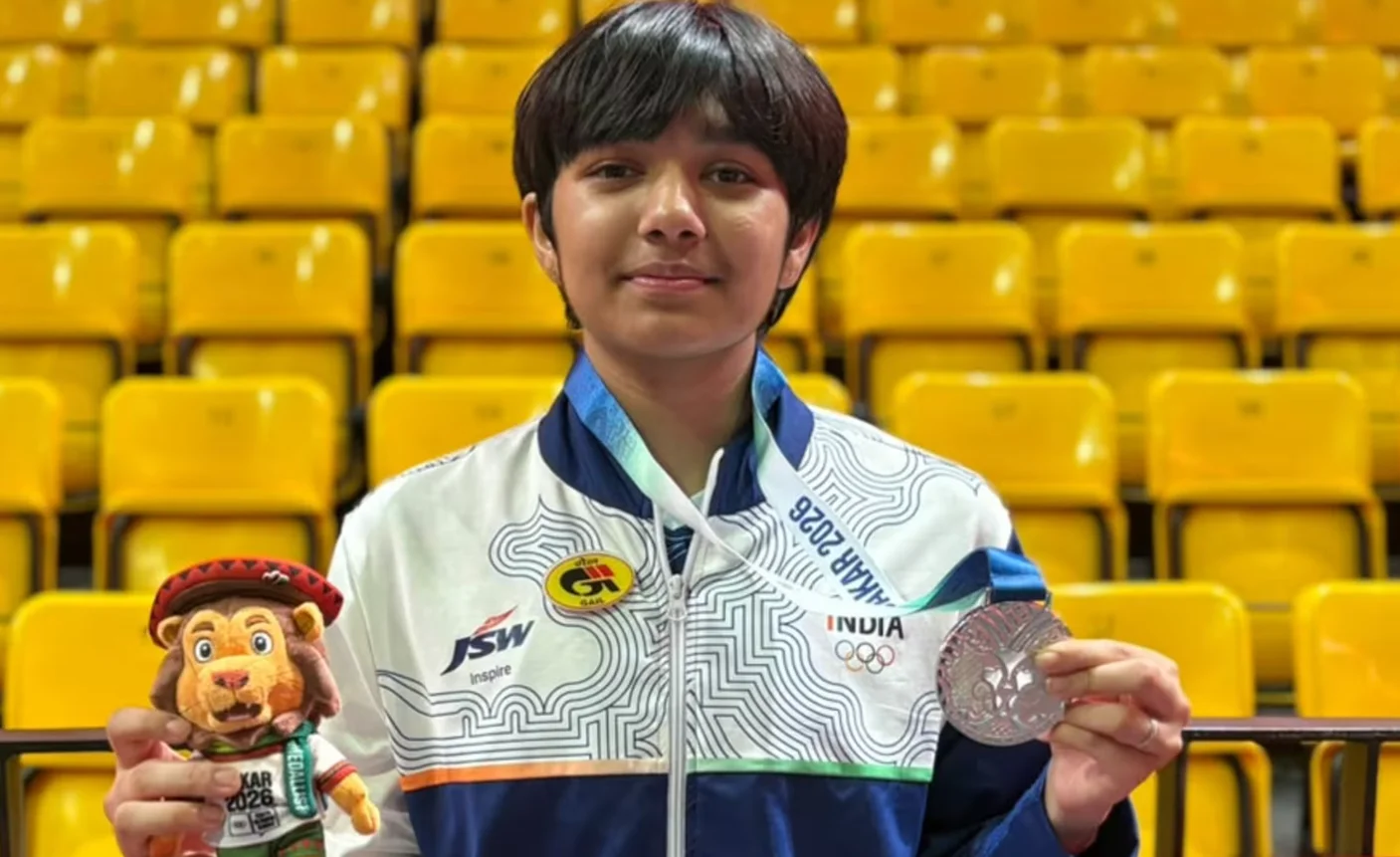
At 10–19 in the deciding game, most players would have been thinking about the medal slipping away. Tanvi Patri was still thinking about the next rally. The 15-year-old Indian fought back against China's reigning world junior champion Zhang Yi Xin in the Dakar 2026 Youth Olympic women's singles final, saved six match points and even earned three chances to win gold. She eventually lost 21–15, 13–21, 24–26, but returned with a historic silver: India's first women's badminton medal at the Youth Olympic Games.
The result: Tanvi Patri (India) won silver at Dakar 2026 after an 82-minute final against Zhang Yi Xin (China), who won gold. This is a Youth Olympic medal, not a senior Olympic medal.
From Odisha to Dakar: who is Tanvi Patri?
Born on 14 April 2011, Tanvi has family roots in Markona, in Odisha's Balasore district. Her parents, Rabinarayan Patri and Sailabala Panda, are IT professionals. Although Odisha is her home state, her badminton education began far from home, in China, where her father worked. She now trains in Bengaluru at the Prakash Padukone Badminton Academy.
That geographical journey matters. Tanvi did not become an international prospect through a single breakthrough tournament. She developed her fundamentals in a demanding Chinese badminton environment, continued competing after her family returned to India during the pandemic, and gradually established herself in India's junior circuit.

The China years: learning badminton before chasing trophies
Tanvi began playing badminton as a young child in China, where her father would visit local courts after work. Coach Jiang Yong Yi helped introduce her to structured training. Reporting on her early years describes a programme built around precise foot placement, hundreds of service repetitions, defensive reactions and consistent net practice. She won several age-group titles in China before the family returned to India in 2020.
For young players, this is perhaps the most useful part of her story. Strong badminton is not built only through smashing harder. Reaching the shuttle early, recovering balance and choosing the right stroke can make an attacking opportunity possible in the first place. Tanvi's later performances suggest how valuable that technical foundation has been.
Her coaches and the Bengaluru development years
After returning to India, Tanvi's family shared videos of her training with the Prakash Padukone Badminton Academy. Her development has been associated with renowned coach U. Vimal Kumar and academy coach Sagar Chopda, while Umendra Singh Rana accompanied her at Dakar. Her father has also played an unusually active role in her sporting education, from training habits to managing tournament logistics.
It would be misleading to credit a single coach with every part of her game. Her early Chinese coaches built core technique; the Bengaluru academy has provided a more demanding competitive setting; and her family has supported the difficult work between tournaments.
Her rise before the Youth Olympics
| Year | Milestone | Why it matters |
|---|---|---|
| 2017–2020 | Won junior age-group events while training in China | Built early competitive confidence |
| 2022–2023 | Won and retained India's under-13 national girls' singles title | Established herself in the domestic junior circuit |
| 2024 | Won the Badminton Asia under-15 girls' singles title in Chengdu | Showed she could win at continental level |
| 2026 | Won the Asian under-17 title | Confirmed her progress against an older junior age group |
| November 2026 | Won Dakar Youth Olympic women's singles silver | First Indian female badminton medallist at the Youth Olympics |
Dakar 2026: Tanvi Patri's road to the silver medal
Tanvi did not reach the final through one fortunate upset. She negotiated her group matches, then defeated Thailand's Kungkaew Kakanik 21–17, 21–13 in the quarter-final to secure a medal. Against Japan's Yuzuno Watanabe in the semi-final, she needed three games, winning 21–14, 11–21, 21–19. That result guaranteed India's first women's singles Youth Olympic badminton medal and set up a final against China's Zhang Yi Xin.
The final: 21–15, 13–21, 24–26
The first game belonged to Tanvi. Her movement and variety helped her recover from an early deficit and take the opener 21–15. Zhang responded in the second, finding better depth and using the court corners to stretch the Indian, eventually taking it 21–13.
The deciding game was extraordinary. Zhang led 19–10 and appeared in control. Tanvi kept the rallies alive, recovered to deuce and saved six match points. She then earned three gold-medal opportunities herself, but Zhang prevailed 26–24. Over 82 minutes, Tanvi demonstrated not just technique but the ability to stay competitive when the scoreboard looked hopeless.
Editorial view: The most impressive part of this final was not simply the comeback. It was Tanvi's willingness to keep making decisions under pressure against an older, world junior champion. At the same time, failing to convert her own match points is a reminder that closing big finals is a separate skill, learned through experience.
What makes Tanvi Patri's playing style special?
1. Court coverage and anticipation
Her academy coaches have highlighted her ability to reach shuttles that appear out of range. This is not just running speed: it is early reading, efficient first steps, controlled lunges and recovery to a useful base position.
2. Defensive skill with attacking variety
Tanvi's early training included reacting to body smashes and working on precise net strokes. Her Dakar final demonstrated that she can combine defence with changes of pace and direction rather than relying on one powerful shot.
3. Temperament in long rallies
The comeback from 10–19 is powerful evidence of her refusal to surrender a match. But composure is not the same as invincibility. Her next challenge will be turning close contests into victories more consistently.
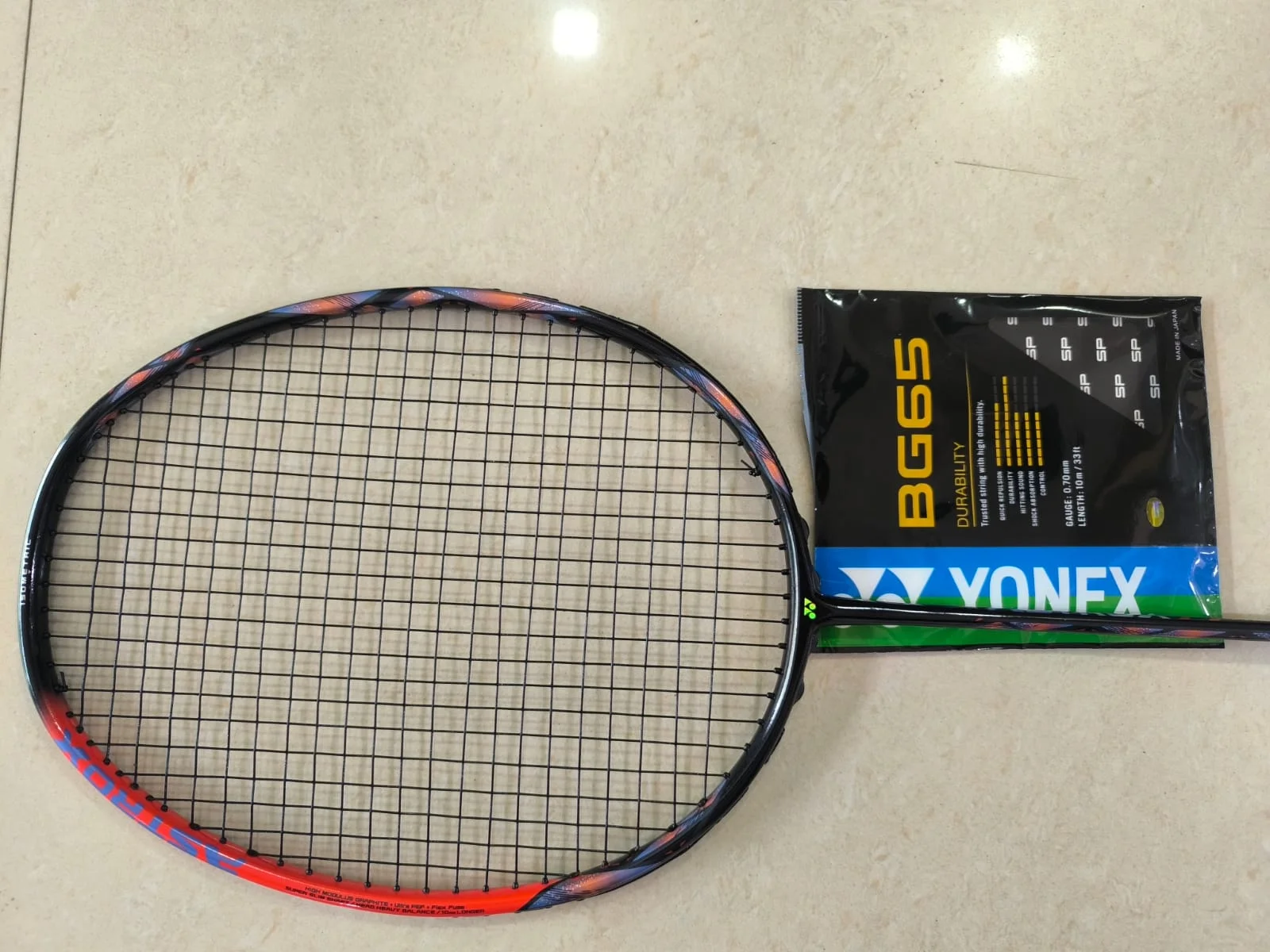
For aspiring players, the practical lesson is to practise movement and shot quality together. Good badminton shoes with suitable court grip can support confident movement, but no equipment replaces footwork drills. Likewise, choose a badminton racket you can control through defence, net exchanges and recovery shots rather than selecting one purely for maximum smash power.
Can Tanvi Patri become the next P. V. Sindhu?
It is a natural question, but it deserves a careful answer. P. V. Sindhu has already built an extraordinary senior career, including Olympic medals and a world championship title. Tanvi has achieved something remarkable at junior level, yet the transition from junior tournaments to the senior World Tour is one of badminton's hardest steps.
There are encouraging parallels: early international success, strong competitive instincts and access to experienced coaching. In fact, Vimal Kumar has previously compared Tanvi's youthful promise with Sindhu's. Still, Tanvi should not be expected to reproduce another player's career. Her game may develop in a different direction, and that is perfectly fine.
My assessment is that she has genuine elite potential, not a guaranteed future Olympic medal. The next few seasons will tell us much more than any comparison made today.
What must improve before she challenges the world's best seniors?
Physical strength and durability: She will need to develop strength, repeated-rally endurance and injury resilience without rushing physical development. Reports have already noted injury and illness interruptions.
Finishing close matches: Creating three gold-medal points against a world junior champion is impressive. Converting those chances, particularly against elite opponents, will be an important learning objective.
Smarter scheduling and recovery: Her family has spoken publicly about extremely long travel, difficult accommodation and fatigue around Dakar. A talented teenager needs proper rest and thoughtful tournament selection, not simply more events.
Senior-level exposure: She must gradually learn to manage the pace, power and tactical variation of experienced international players. Progress should be measured over seasons, not by the outcome of a single tournament.
What her medal means for Indian badminton
India has celebrated Youth Olympic badminton silver medals through H. S. Prannoy in 2010 and Lakshya Sen in 2018. Tanvi now adds a significant first for the women's game. It is a reminder that India's next generation of female shuttlers can compete with the strongest junior systems in the world, including China.
Her story also offers a broader lesson for Indian sport: technical coaching at the right age, family support, quality competitive environments and athlete welfare all matter. Medals are visible; the training and recovery systems behind them are less visible, but equally important.
The road ahead: let Tanvi become Tanvi
At 15, Tanvi Patri has time on her side, but also a great deal to learn. Her silver medal in Dakar should be celebrated without turning it into a demand that she immediately become the next Sindhu. What she has already proved is that she belongs on court with the world's leading juniors, and that she can fight through difficult moments against them.
For Indian badminton supporters, that is reason enough to be excited. The best tribute to this achievement is to follow her development patiently, appreciate the quality of her game and give her room to build a career of her own.
About the author
Subham Sarkar writes for Khelmart's sports editorial section, covering badminton players, equipment and developments in Indian sport. His editorial approach focuses on the details behind performances, balanced analysis and practical lessons for players and fans.


Comment(s)
No comments yet
Be the first to share your thoughts about this article.
Leave a Comment
Your email address will not be displayed publicly.